Art therapy and your spiritual potential


Written by
Julie Howell 6/21/2023
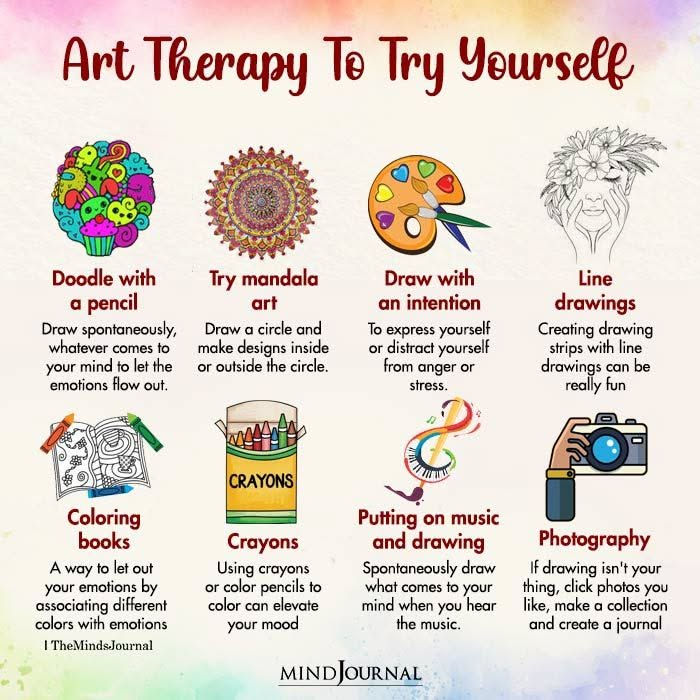
Spiritual potential is the inner resources we all have to deal with stress. Seaward explains that we have spiritual potential and notes the inner resources as humor, compassion, patience, tolerance, imagination, and creativity (Seaward, 2020, pp. 222). The theory of using art for therapy was explored by Freud and Jung as a means for them to study emotions. Art therapy really gains momentum with Margaret Naumberg (Seaward, 2020, pp. 284). Art therapy is defined as a coping technique that uses different media to express feelings and emotions (Seaward, 2020, p. 283).
Art therapy taps into that spiritual potential. Mathew Fox explains the steps for raising our individual consciousness. In Fox's descriptions of steps to tapping into our spiritual potential, Via creativa is step # 3, which caught my attention. He describes it as an enlightenment that fills the voided space from the previous step #2, where negativity is cleansed. The enlightenment in step 3 comes in the form of inspiration and imagination (Seaward, 2020, pp. 203). Based on the descriptions, Art therapy would coincide with Via Creativa (step #3).
Seaward mentions using art therapy for PTSD, and I did find a study involving veterans where art therapy was used to nonverbally communicate and eventually introduce them to verbal therapy (Schnitzer, 2022). Another study done by Hunter (2019) advised that art therapy holds promise and should be considered as an adjunct therapy for soldiers with PTSD.
The goals of art therapy are to strengthen the ego, release negative emotions, express and detect anger emotions, convey inner thoughts, and reduce guilt, allowing freedom of self-expression to strengthen the mind-body connection by using the imagery aspect of self-healing (Seaward, 2020, pp. 285). Evelyn Virshup (1970) explains that it’s not the outcome of the art but the process of the creation that is the most meaningful (Seaward, 2020, pp. 287).
References
Hunter, S. R. (2019). Drawing soldiers out of post-traumatic stress disorder. Military Medical Research,6. https://doi.org/10.1186/s40779-019-0195-8
Schnitzer, G., Holttum, S., & Huet, V. (2022). “My heart on this bit of paper”: A grounded theory of the mechanisms of change in art therapy for military veterans. Journal of Affective Disorders, 297, 327–337. https://doi.org/10.1016/j.jad.2021.10.049
Seaward, B. L. (2022). Managing Stress: skills for self-care, personal resiliency, and work-life balance in a rapidly changing world. Tenth Edition. Burlington: Jones and Bartlett Learning, LLC, An Ascend Learning Company.


Comments